In Paris, mornings start quietly. The smell of fresh bread drifts from boulangeries, keen joggers take to the streets before being overrun by honking commuters, and sunlight hits the Seine in a way that makes everything look deliberate. It’s a moment of pause in a city that feels consistently alive, and the kind of clarity that makes you notice how tension can exist in the simplest things.
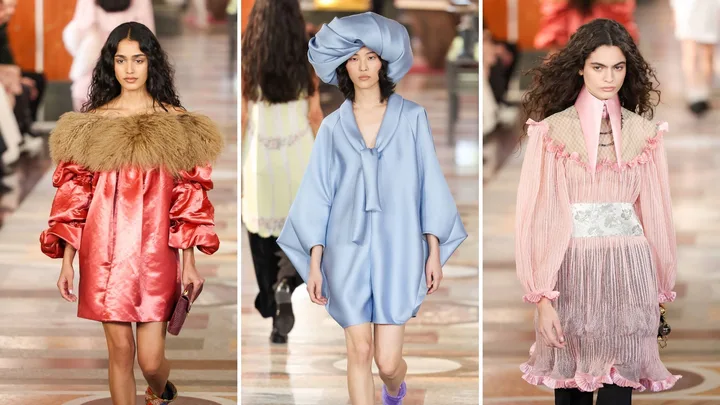
The summer apartments at the Louvre feel like another version of this quiet escape. While they are no stranger to admirers, on Tuesday afternoon, its gilded interiors took on a different role. The ornate, memory-laden rooms became the stage for Louis Vuitton’s latest ready-to-wear collection, where Nicolas Ghesquière seemed to pose a very clear question: what happens when fragility is treated as power? The answer unfolded as a vision of romantic futurism, in which tradition was refracted through a contemporary lens of corseted silks, cloudlike skirts, and sheer layers that turned air into architecture.
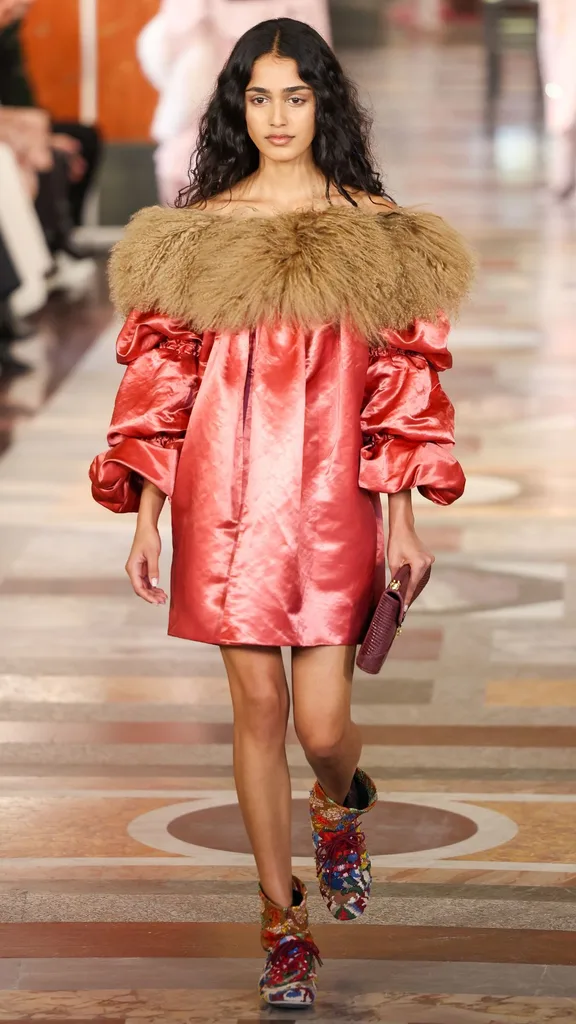
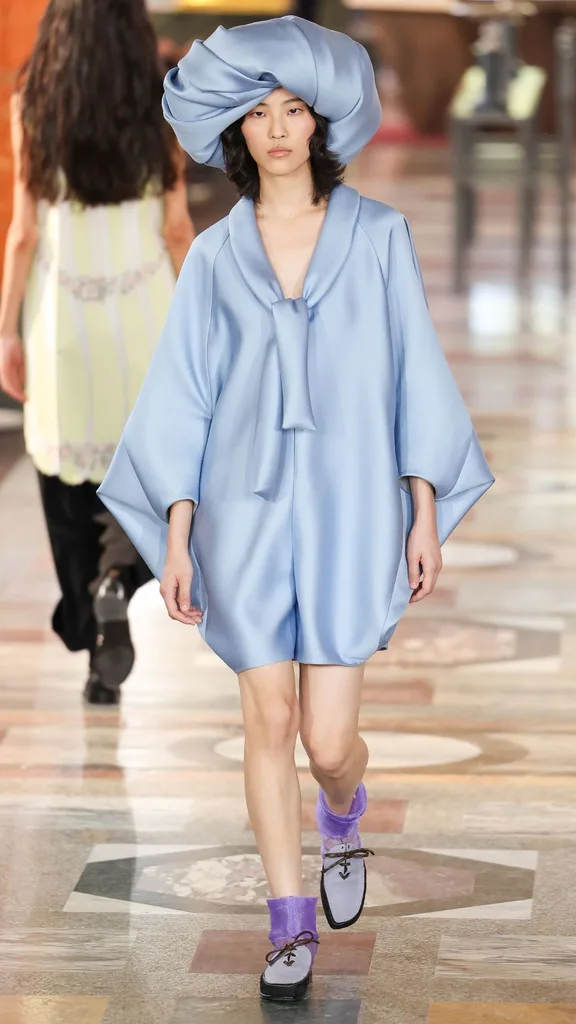
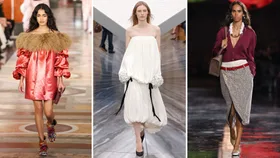
The show opened with a study in lightness. A sheer, crinkled fabric—almost weightless—was traced with black piping that sculpted the body’s outline, a trompe l’œil effect that managed to feel both precise and fluid. Corseted bodices stood tall above the bust before dissolving into frilled edges; elsewhere, skirts unfurled with cloudlike ease, offsetting architectural tops with movement. Just when the collection seemed poised to tip into costume, Ghesquière pivoted—sending out billowing skirts, sheer layers, and whispers of fur. The mood was neither strictly historical nor overtly futuristic, but somewhere in the space between—a deliberate tension that has become integral to Ghesquière’s Vuitton.
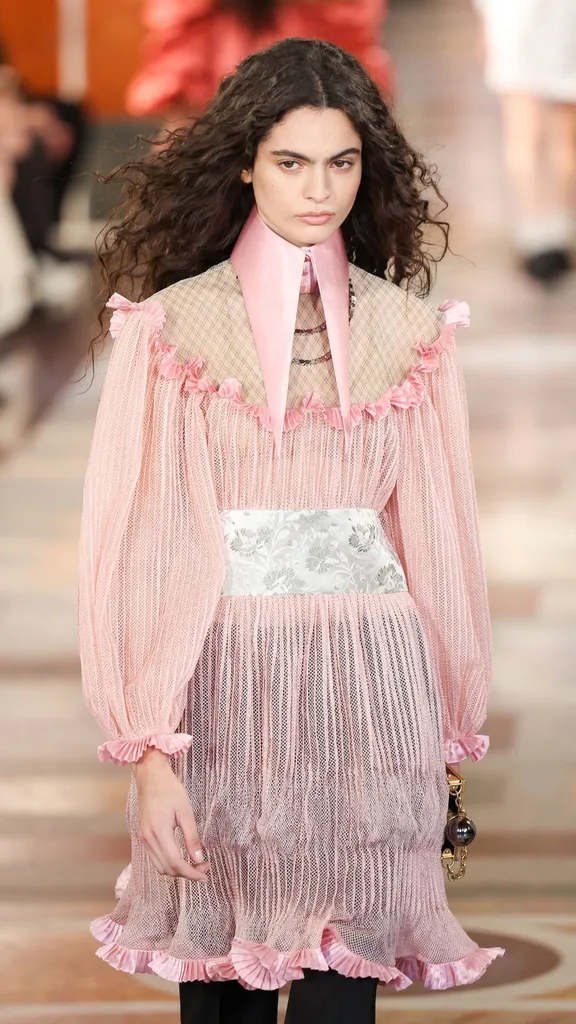
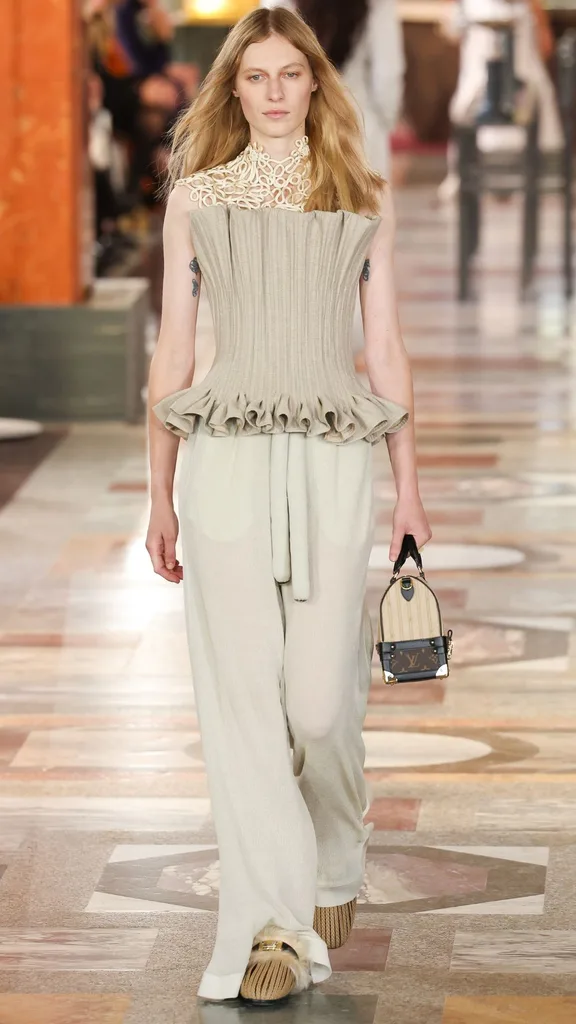
Fabrics spoke in dialogue rather than monologue. Androgynous tailoring appeared alongside gowns with a romantic sweep, suggesting that femininity is a shifting spectrum. Accessories grounded the looks without detracting from them: boots and flats set the pace, while monogram purses reminded the audience of Vuitton’s enduring roots in travel and utility.
Though it wasn’t just the clothes that told this story. Zendaya made her first fashion month appearance in a metallic silver blazer dress with faux-fur collar, echoing the show’s central play between sharp tailoring and tactile drama. Sophie Turner played the same game in a black ensemble with flared sleeves and chunky boots. Emma Stone, Ana de Armas, and Phoebe Dynevor completed a front row that felt as considered as the collection itself.
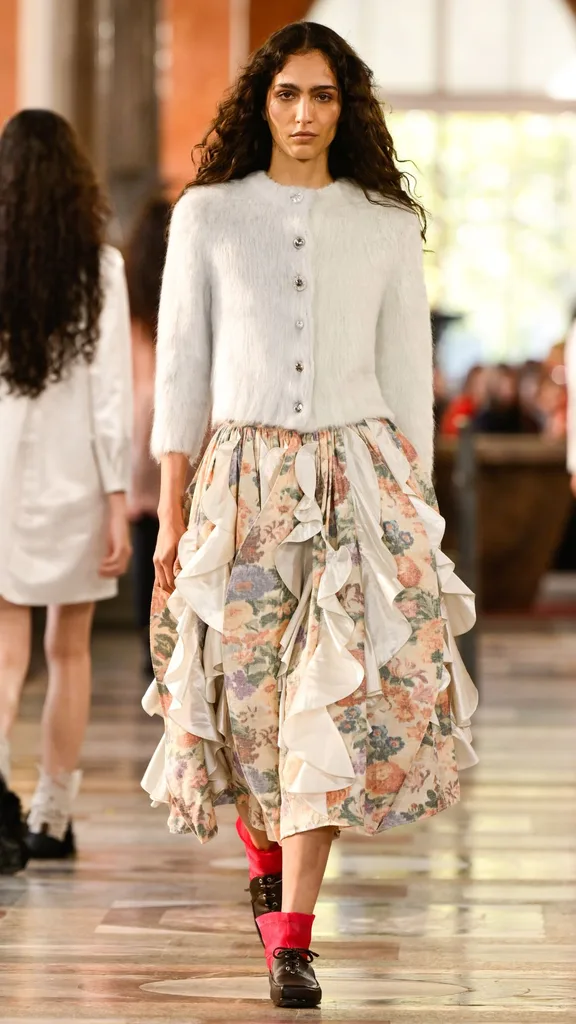
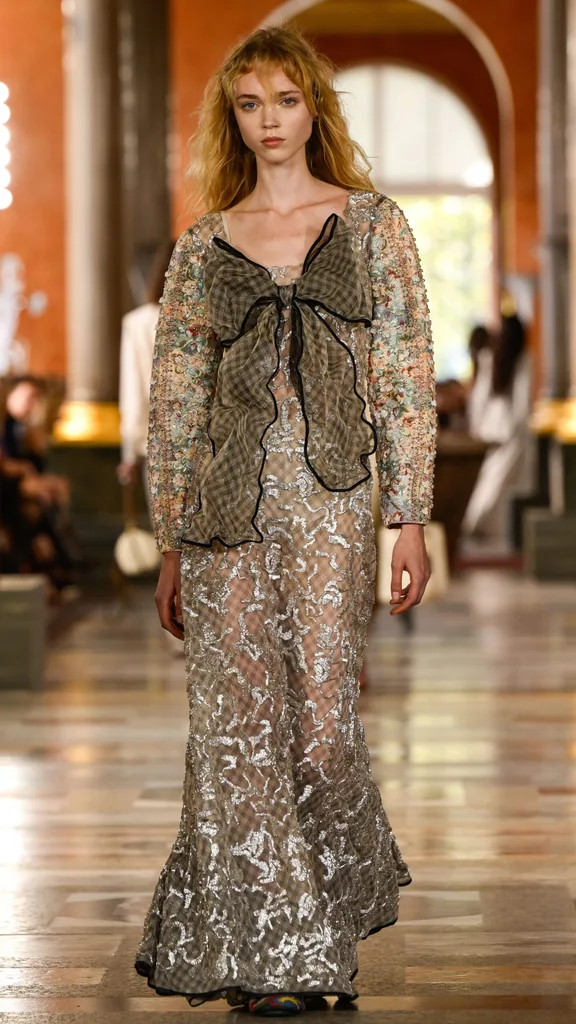
The genius of Ghesquière lies in his ability to juggle contradictions without letting anything collapse. His Vuitton has always thrived on these push-pull dynamics: structure and fluidity, masculine and feminine, historical nods reimagined for tomorrow. Ghesquière’s Vuitton, like the city itself, reminds you that beauty often lives in those moments of subtle equilibria—like how Paris hums between quiet corners and bustling boulevards, each moment perfectly poised in motion.

Related stories
Native ad body.
Native ad body.
Native ad body.